
 Image 1 of 2
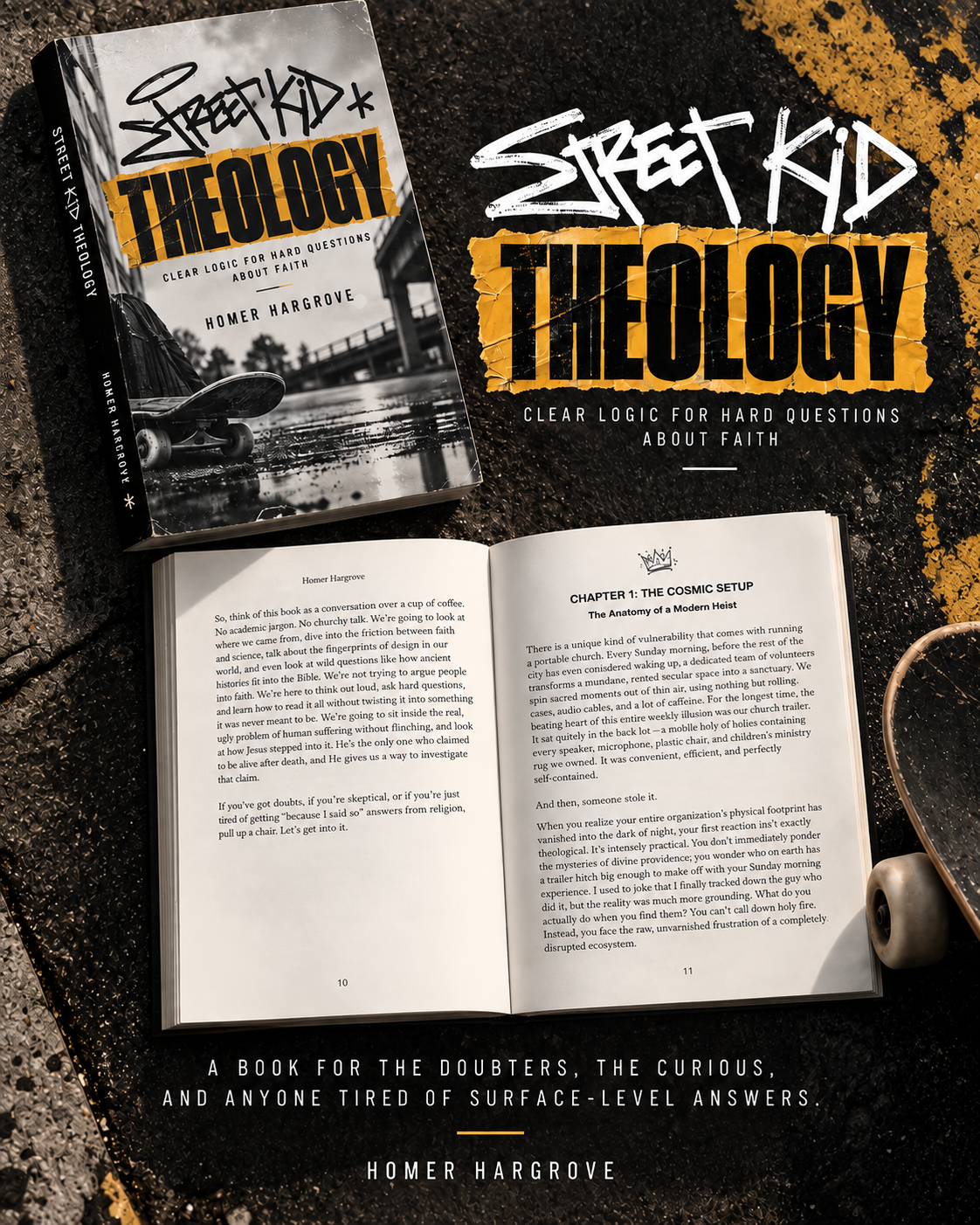 Image 2 of 2
Your trailer just got stolen out of the church parking lot. Now what?
That's not a metaphor. That's Tuesday.
Street-Kid Theology isn't a book written from a padded office chair with a seminary degree on the wall behind it. It's written by a pastor who spends his weeks sitting in recovery centers with people who have been chewed up and spit out by life, and who have zero patience for plastic answers.
This book exists because those people ask real questions, and they deserve real answers:
Who created God?
Are we alone in the universe?
Can I actually trust that the Bible hasn't been changed?
If God is good, why does my life feel like a war zone?
Is Jesus really the only way — or is that just something religious people say to feel superior?
Homer Hargrove doesn't flinch from any of it. Using street-level logic instead of ivory-tower jargon, he walks through the hardest questions about faith with the same bluntness you'd expect from a friend who's actually been there — because he has. From childhood trauma to addiction to standing on a stage wondering if any of this is even true, Homer checks the receipts on every claim, refuses to hide behind "just have faith," and builds a case for Christianity that can survive contact with real life.
This isn't a book that ends with more questions.
It ends with an open door.
Your trailer just got stolen out of the church parking lot. Now what?
That's not a metaphor. That's Tuesday.
Street-Kid Theology isn't a book written from a padded office chair with a seminary degree on the wall behind it. It's written by a pastor who spends his weeks sitting in recovery centers with people who have been chewed up and spit out by life, and who have zero patience for plastic answers.
This book exists because those people ask real questions, and they deserve real answers:
Who created God?
Are we alone in the universe?
Can I actually trust that the Bible hasn't been changed?
If God is good, why does my life feel like a war zone?
Is Jesus really the only way — or is that just something religious people say to feel superior?
Homer Hargrove doesn't flinch from any of it. Using street-level logic instead of ivory-tower jargon, he walks through the hardest questions about faith with the same bluntness you'd expect from a friend who's actually been there — because he has. From childhood trauma to addiction to standing on a stage wondering if any of this is even true, Homer checks the receipts on every claim, refuses to hide behind "just have faith," and builds a case for Christianity that can survive contact with real life.
This isn't a book that ends with more questions.
It ends with an open door.